
I N T R O D U C T I O N
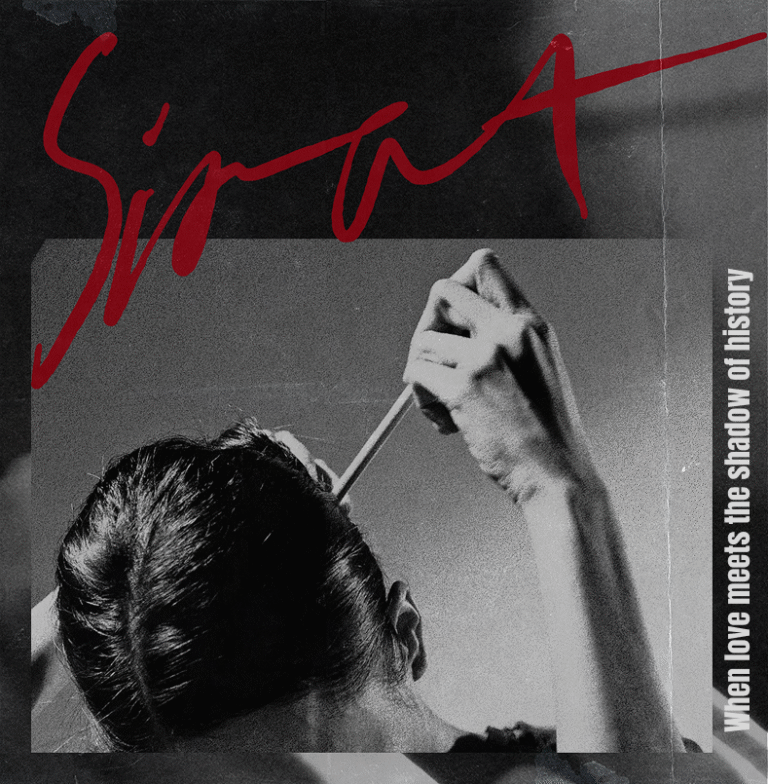
Sirat is an intimate exploration of two lovers bound by history, love, and the collective wounds of a nation. The film emerges from a simple yet profound question: can we face our past without hatred, and still seek truth with clarity?
Rooted in historical research and personal reflection, Sirat is more than a love story set
against political tragedy. It is a meditation on memory — on how history never truly ends, but continues to live within bloodlines, photographs, and unfinished conversations.
This dossier presents the artistic vision, historical background, and creative approach behind Sirat. We believe cinema can serve as a space for reflection and dialogue — where the pain of history is not erased, but understood.
Sirat is a psychological mystery drama exploring two generations bound by history and love.Set across two intertwined timelines—1998 and 1965–1966—the film blends reality and memory through the story of Ara and Beni, lovers whose families are linked by a hidden tragedy. Combining poetic visual language with historical research, Sirat reflects on how the collective wounds of the past continue to shape our understanding of love, justice, and humanity in the present day.
Genre
Psychological Drama /Historical Mystery
DURATION
20 minutes
LANGUAGE
Indonesian with
English subtitles
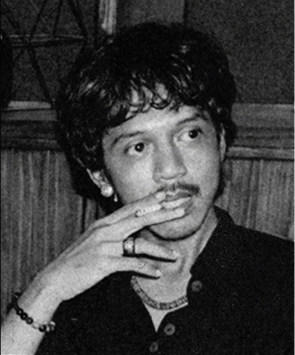
Nara Satriangga
Producer & Director
Visual Artist & Anthropologist
Portofolio
Kembara
(Short Movie, 2025)
Taman Persimpangan Dahlia
(Short Movie, 2019)
Doni and the Pig Head
(Short Movie, 2018)
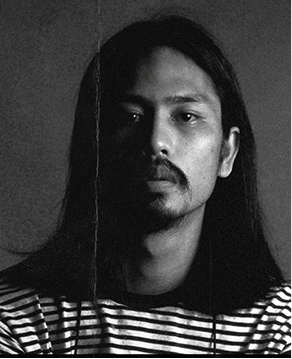
Azhar Aulia
Director & Screenplay Writer
Architect & Photographer
Portofolio
Oh My Honey by Irva Lestari
(Short Movie, 2023)
Buah Rindu
(Short Movie, 2023)
Taman Persimpangan Dahlia
(Short Movie, 2019)
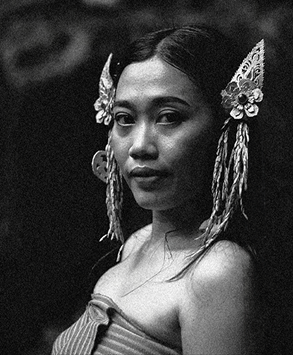
Dewa Ayu Eka Putri
Script Writer
Anthropologist, Dancer & Lecturer
Portofolio
Roots
(Short Movie, 2024)
Land Spirit
(Short Movie, 2024)
Roots Premier
(Short Movie, 2024)
LOGLINE
Ara (30) and Beni (32) are about to marry—until a shocking discovery reveals that Ara’s uncle executed Beni’s parents during the mass killings of 1965–66.
As Ara investigates her family’s buried past, she unravels a haunting truth of love, betrayal, and inherited guilt that threatens to consume them both.

In 1998, amid Indonesia’s lingering political unrest, Ara, a young photographer, helps her fiancé Beni uncover the truth about his missing parents — a search demanded by Ara’s mother before their marriage. What begins as a personal quest unravels a haunting secret: Beni’s parents were executed during the 1965 mass killings, and the man responsible was Ara’s uncle.
Through fragmented memories on obsolete film negatives and darkroom revelations, Sirat weaves together love, grief, and inherited trauma. The film explores how the past continues to shape the present — and whether love can survive beneath the shadows of history.
In Sirat, the boundaries between past and present dissolve through the eyes of Ara, a woman trapped between love and inherited guilt. The film invites the audience to confront how history continues to live within us — not as a memory to be forgotten, but as a truth that demands to be understood.
At Kedonganan Beach, Bali, I once witnessed an incident that changed how I understand social wounds. A restaurant manager — still shadowed by the memory of the Bali bombings that happened decades ago — shouted at fishermen resting by the shore: “Go away, you Javanese! Terrorists!”
That moment struck me. It revealed how collective trauma lingers — inherited as prejudice, shaping how we see one another. It reminded me of friends rejected, shunned, or branded because of histories they never chose. These unseen wounds continue to divide us, long after the violence has ended.
Sirat was born from that awareness. It is not a story about the past, but about how the past breathes within the living. Through Ara and Beni — two lovers separated by an old tragedy — the film explores our struggle to accept, not erase, the scars we inherit.
director's
statement
main themes
1. The Search for Identity and Truth
Beni and Ara's search for their origins becomes a metaphor for a generation seeking identity and moral clarity after decades of silence.
2. Reconciling with the Past
- The tension between vengeance and the courage to face truth becomes the film's emotional core.
- The protagonists confront the dark legacy of the 1965-1966 tragedy.
3. Love Tested by Secrets and Family Conflict
- The relationship between Beni and Ara is shadowed by family secrets rooted in a violent past
- Their love becomes a test of loyalty, loss, and inherited ideological divide.
4. The Tension between Revenge and Hope
Beni’s moral dilemma mirrors a nation’s struggle to choose between vengeance or the hope of a just future.
5. Love Historical Trauma and Inherited Violence
- The Film portrays how collective trauma is transmitted across generations.
- Hidden histories force each character to reexamine their identity and moral compass.
"reconciliation and the struggle for love in the shadow of a dark history"
ethical
note
On Depicting Violence
In Sirat, violence is never shown for its spectacle, but felt through silence, absence, and the human gaze. The film refuses to take sides in a history too complex for clear villains or heroes. Its true question is not who was right, but why violence became inevitable — why neighbors turned against neighbors, and fear overcame compassion. Through shadow and restraint, Sirat seeks to remember without re-enacting, to grieve without exploiting, and to remind that empathy, not ideology, is the path toward understanding.


Born into privilege yet raised in solitude, Ara lives between two worlds — the tangible and the unseen. An indigo child turned photographer, she channels her gift through light and shadow, transforming the invisible into image. Her calm defiance conceals a storm of empathy; she feels too much, sees too deeply, and carries what others refuse to acknowledge.
For Ara, the darkroom is not a space of observation but of communion — a bridge between the living and the lost. Her act of printing film becomes a ritual of revelation, uncovering what history has tried to erase. When love confronts her with buried truths, she becomes both witness and medium, torn between her mother’s control, her lover’s obsession, and her own awakening.
Through her journey, she crosses the liminal threshold between 1998 and 1965, confronting inherited trauma that transcends generations. She embodies the film’s quiet resistance — the courage to face the past without surrendering to it.
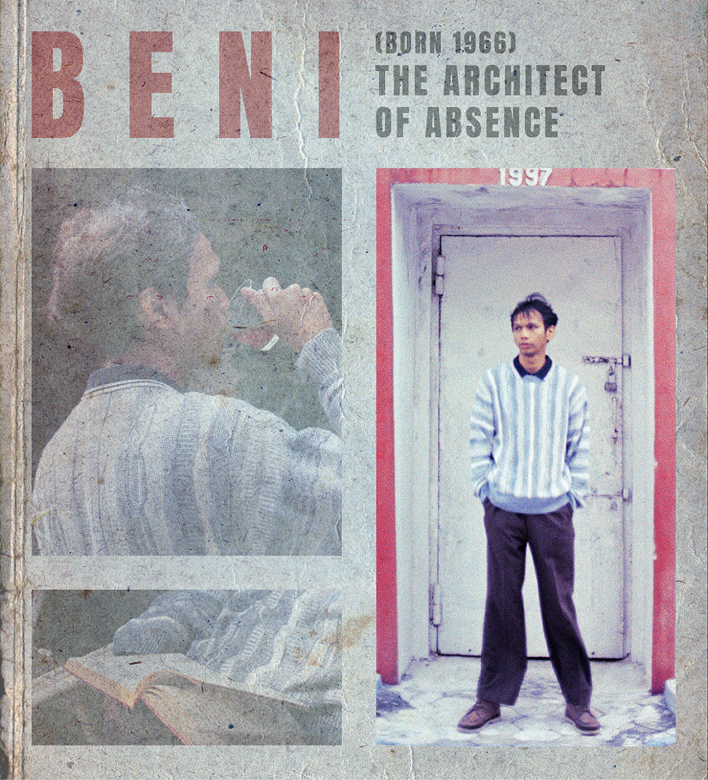

A man defined by what he cannot remember, Beni has spent his life constructing certainty — through blueprints, through logic, through control. An orphan of history, he believes that reason can fix what time has broken. Yet when his search for identity collides with love, he discovers that truth, like architecture, can also collapse.
Haunted by loss and driven by obsession, Beni stands at the fault line between justice and madness. His love for Ara becomes both compass and curse, forcing him to confront the inheritance of silence that binds them. In him lives the question at the heart of Sirat: how much truth can love endure before it shatters?

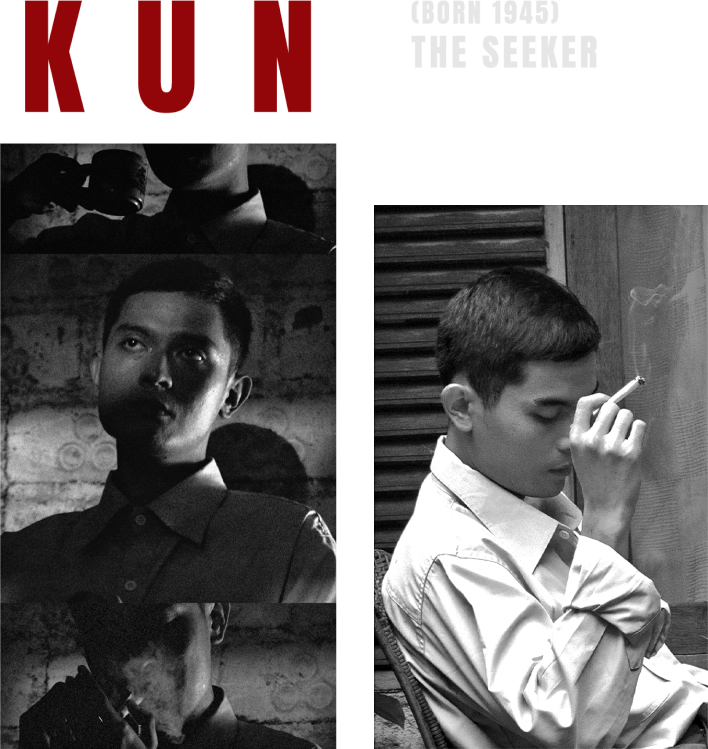
Born into privilege, Kun grows up in a household where kindness feels transactional and loyalty can be bought. The son of Menak — a wealthy noble family — he abandons comfort and inheritance in search of sincerity among the poor — “people who smile without being paid,” as he once wrote in his notes. Eventually, he becomes Sakti’s protégé and is assigned to accompany and learn from Samara during her exile.
His rebellion is not purely political but existential — a hunger to live authentically in a world built on illusions. Yet beneath his youthful idealism lies emotional fragility — a longing for purpose that makes him both compassionate and dangerously impulsive. Kun becomes a mirror of a generation lost between empathy and ideology, yearning for truth yet haunted by the shadows of his own choices. And in Samara, he finally finds what he has been searching for.
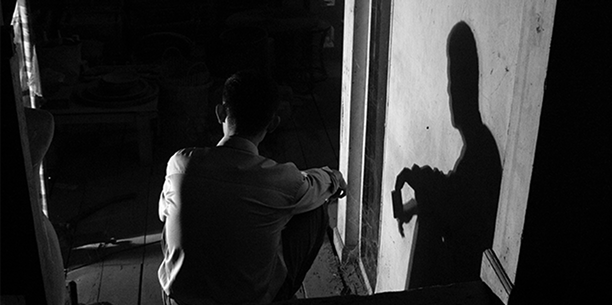
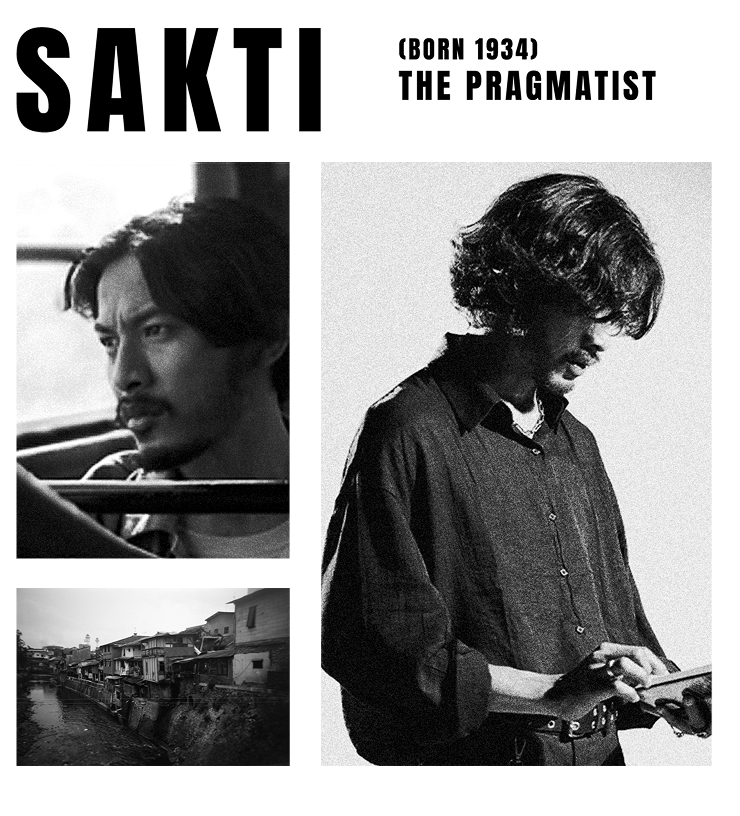

A respected journalist turned underground organizer, Sakti co-founded Sanggar Beringin Putih with Samara — a sanctuary where art and politics intertwine. Known for his charm and sharp intellect, he moves effortlessly between social classes, using his wit as both shield and weapon.
But beneath his eloquence lies exhaustion. The growing chaos of 1965 forces Sakti into difficult choices: to survive, he forges dangerous alliances, drifting closer to radical factions he once distrusted. His pragmatism, meant to protect Samara and their circle, slowly corrodes his ideals.
Torn between love and revolution, Sakti becomes a man divided — a true friend who cannot show tenderness, a leader who cannot show fear. In his desperation to save others, he loses himself.
He is the mirror of Samara’s light — the shadow that reveals how noble intentions can decay under the weight of survival.
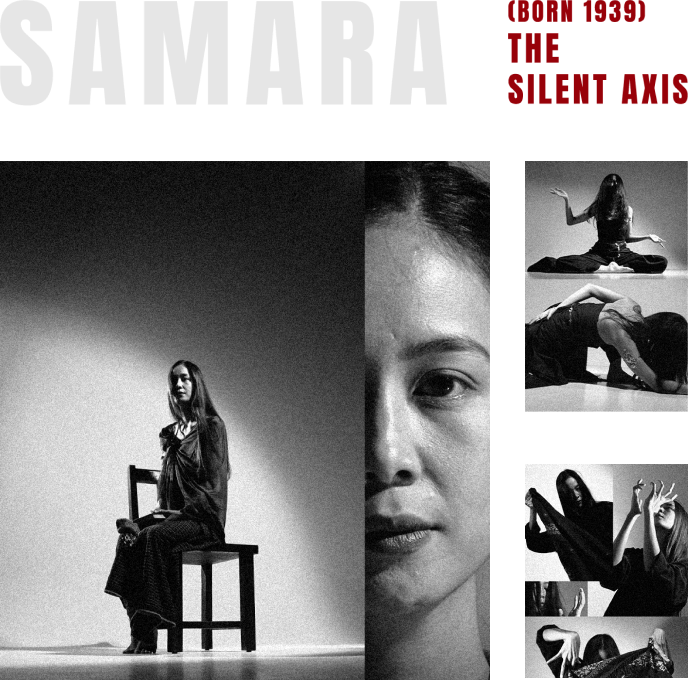
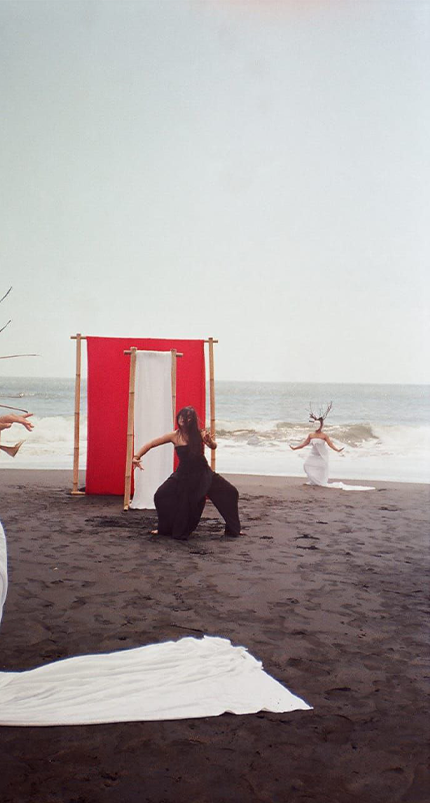
A dancer, thinker, and visionary, Samara is both muse and mystery — a woman whose art transcends performance, becoming an act of resistance. She co-founded Sanggar Beringin Putih with Sakti, creating a haven where creativity, intellect, and dissent intertwine. Unlike Sakti’s fiery pragmatism, Samara moves with quiet conviction — her rebellion expressed through rhythm, empathy, and an unyielding faith in justice.
Born with rare intuition, she senses truth before it is spoken. To her, art is not ornament but invocation — a way to summon the conscience of her time. Yet her brilliance isolates her; her sensitivity, often mistaken for madness. When the ruler turns its gaze upon her, she accepts exile not out of fear, but clarity — knowing that sacrifice is inevitable.
In exile, accompanied by the young idealist Kun, Samara’s struggle transforms from political to spiritual. Through solitude surrounded by chaos, she reaches an inner equilibrium — seeing justice not as vengeance, but as cosmic balance. Her final act is not surrender, but transcendence.
Samara is the unseen pulse of Sirat — both spirit and witness, her legacy lingering in those who continue to seek truth beneath the ruins of history.

DRAMATIC ESSENCE





Sirat interweaves the Live of Five Interconnected souls across generation.
- Samara, Sakti and kun embody the suppressed voices of the 1960s
- Ara and Beni inherit their unfinished struggle for the truth and love
Together, their stories form a cinematic reflection on how collective trauma, political silence, and personal memory shape the possibility of reconciliation - not as forgiveness, but as the courage to face history with clarity.
CREATIVE APPROACH
Sirat unfolds as a journey across time — between the present (1998) and the past (1960s) — where two worlds intertwine: reality and memory. The darkroom becomes a central metaphor, a space where truth, love, and the sins of history slowly emerge from the shadows, like photographs developing from life’s negatives.
Cinematically, Sirat combines realism with visual symbolism. Sound plays a dramatic and psychological role — the dripping of water in the darkroom, the hum of a rusted fan — serving as echoes of memories that refuse to die. Silence is as expressive as music; the soundscape mirrors the inner turbulence of the characters more than dialogue ever could.
Characters and spaces are constructed with a semi-theatrical sensibility — lighting and blocking reveal the emotional geography of guilt, love, and longing. Every element holds symbolic weight: the red hue of the darkroom, the recurring image of the banyan tree, the lingering shadow of unfinished stories.
THE FILM EMPLOYS TWO DISTINCT VISUAL LANGUAGES:
- The 1998 timeline is rendered in color with an anamorphic ratio, wvoking emotional realism and the intimacy of modern life.
- The 1960s timeline is shot in black and white, 4:3 ratio, creating the texture of archives and memories - trapped between nostalgia and trauma.
- The 1998 timeline is rendered in color with an anamorphic ratio, wvoking emotional realism and the intimacy of modern life.
- The 1960s timeline is shot in black and white, 4:3 ratio, creating the texture of archives and memories - trapped between nostalgia and trauma.
SIRAT IS NOT MERELY A FILM ABOUT THE PAST, BUT AN INVIATION TO "TRACE THE SCARS" - TO CONFRONT THE INTERTWINED LEGACIES OF LOVE AND VIOLENCE, VICTIMS AND PERPETRATORS, HISTORY AND HUMANITY.
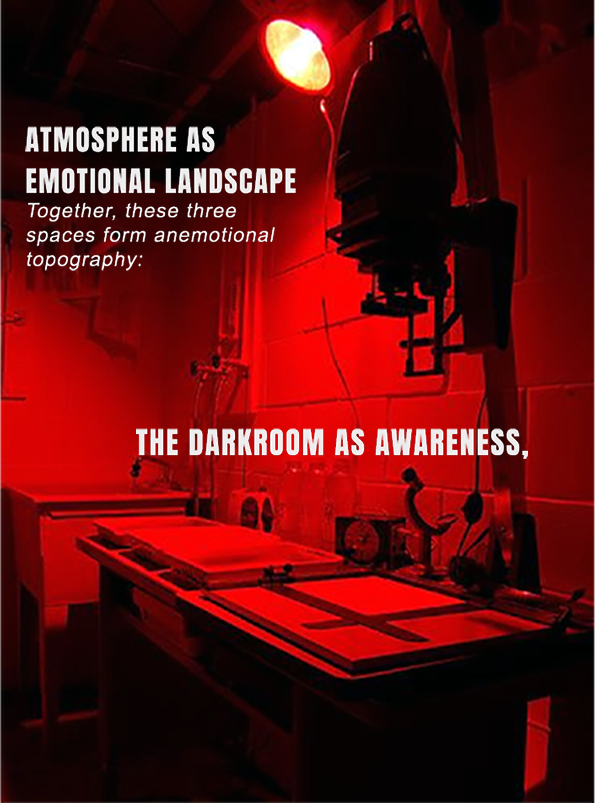
the darkroom (1998)
Ara’s cramped workspace glows under a red tungsten light — a place between danger and intimacy. Here, every photograph she develops reveals not just an image, but a buried history.
The darkroom becomes a liminal space — where film and memory, past and present, are developed together.
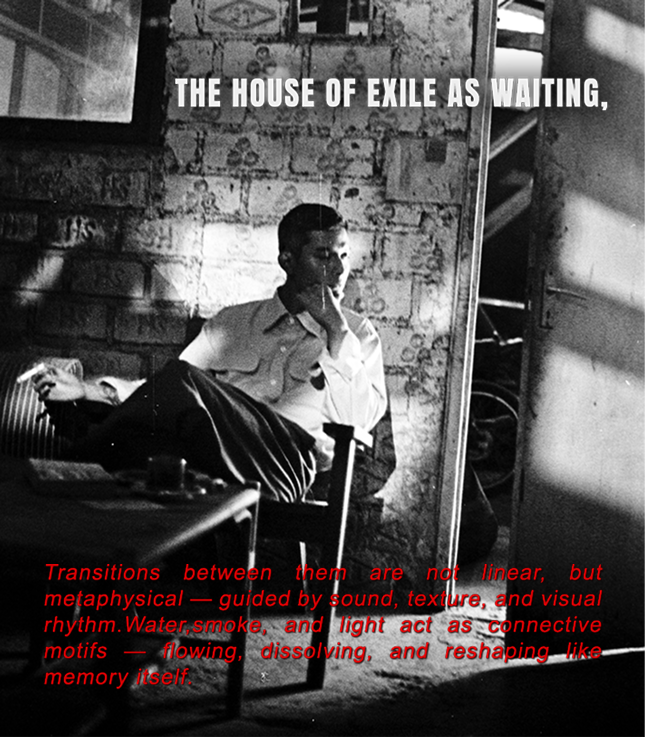
the house of exile (1964-1966)
A remote coastal house shelters Samara, a dancer accused of political sympathy, and Kun, a young idealist. Flickering oil lamps, the sound of the sea, and the weight of silence shape this space — both refuge and prison.
Shot in black-and-white, 4:3 ratio, the house feels like a living archive of fear and longing.
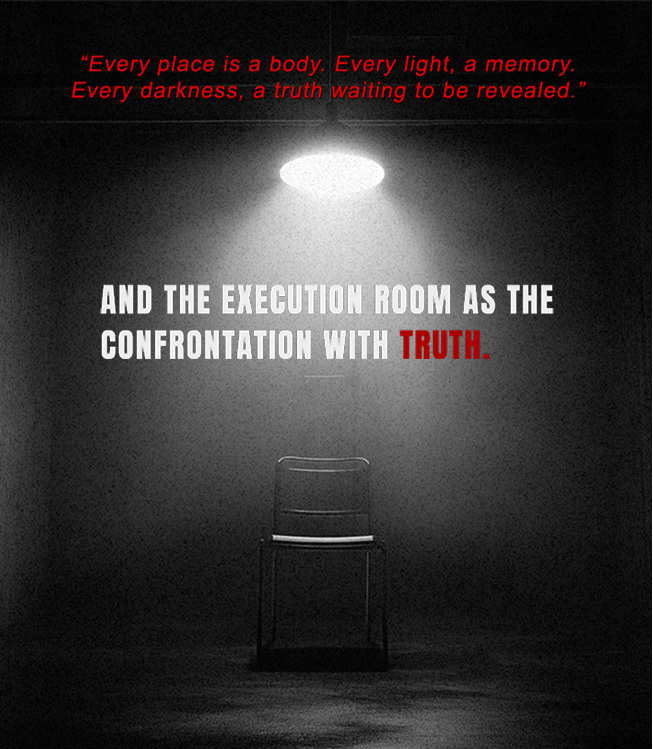
the execution room (1966)
A narrow concrete chamber lit by a single bulb. It has no specific location — a symbolic void where love, ideology, and violence collide. Flickering shadows turn this room into a portrait of human frailty and prejudice brutality.
The walls, stained with dried blood, echoes of unseen screams. This is where the myth of heroism and betrayal collapses — the ultimate confrontation between faith, fear, and forgiveness.
historian's statement
BAGUS BAHAGIO RAHARJO
HISTORIAN & LECTURER IN HISTORY – DIPONEGORO UNIVERSITY
History and memory are distinct yet deeply intertwined. Memory is embodied—it lives within people and communities, shaping their sense of identity and belonging. History, on the other hand, is embedded in social structures; it can be rewritten, but often lacks the emotional truth carried by lived experience.
The 1965 tragedy in Indonesia exemplifies how a historical event can transform into a living trauma. It transcends academic narrative and becomes a collective belief passed through generations—dividing society into “us” and “them.” Within this politics of memory, some are framed as rightful victims seeking justice, while others remain silenced as the misunderstood.
Sirat seeks to navigate this collective memory through a lens of empathy and reflection. The film does not aim to settle historical disputes, but to confront the lingering wounds they have left behind. It invites audiences to recognize that reconciliation begins not with forgetting, but with the courage to remember clearly—and to continue forward without hatred.